Key Takeaways
- Tank heaters cost less upfront. Tankless units last longer and never run out.
- Size a tank by its first-hour rating, and a tankless unit by flow rate and temperature rise.
- Your fuel (gas or electric), venting and space often decide the answer.
- Plumbers recommend the unit that fits your household, not a single brand.
The Three Main Types of Water Heater
Conventional tank
A tank, usually 40 to 80 gallons, keeps water hot and ready. It's the most common type, the cheapest to buy, and the simplest to replace like-for-like. The trade-off is that you can run out of hot water, and the tank loses some heat while it waits. Expect about 8 to 12 years of life.
Tankless (on-demand)
A tankless unit heats water as it flows through, so you don't run out. It's compact and wall-mounted, and with yearly descaling it can last up to about 20 years. It costs more to buy and install. Gas units often need a larger gas line and new venting.
Heat pump (hybrid)
A heat pump water heater pulls heat from the surrounding air to warm a tank. It can use much less electricity than a standard electric tank, but it needs space, a reasonably warm room, and a condensate drain. It's worth considering if you're on electric and have room in a basement or utility area.
Gas or Electric?
Usually the fuel you already have decides it. Switching fuels means new gas piping or electrical work. Gas heaters recover faster and keep working in a power outage (most tank models). Electric heaters are simpler, need no venting, and fit in more places. For gas units, the venting, the combustion air and the gas line size all have to be right, which is a job for a licensed plumber. See gas line work.
How to Size a Water Heater
Undersizing means cold showers. Oversizing means paying to heat water you never use.
| Household | Typical tank size | What to check |
|---|---|---|
| 1–2 people | 30–40 gallons | First-hour rating |
| 2–3 people | 40–50 gallons | First-hour rating |
| 3–4 people | 50–60 gallons | First-hour rating |
| 5+ people | 60–80 gallons | First-hour rating, or consider tankless |
For tanks, the number that matters most is the first-hour rating: how much hot water the heater can deliver in a busy hour. It's on the yellow EnergyGuide label. For tankless units, add up the flow rates of the fixtures you run at the same time (a shower uses about 2 to 2.5 gallons per minute). Then check the unit can heat that flow from cold winter water to your set temperature.
In a Maryland winter, the water coming into your house is much colder than in summer, so a tankless unit delivers less flow at the same temperature. Size it for winter, not July.
So, What Water Heaters Do Plumbers Recommend?
Honestly, it depends on the house. Here's how we usually think about it:
- Replacing a working tank on a budget: a new tank of the right size, same fuel. Simple and good value.
- Big household or long hot-water demand: a tankless unit, or a larger tank with a high first-hour rating.
- Short on space: tankless.
- Electric home, room in the basement: look at a heat pump water heater.
- Large house with long pipe runs: add a recirculation pump so hot water arrives fast.
Installation Matters as Much as the Heater
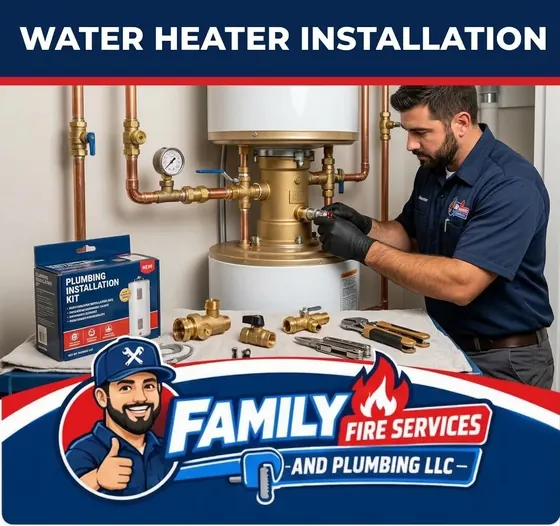
A good heater installed badly is a bad heater. Look for correct venting, a properly piped relief valve, a thermal expansion tank where the system needs one, a drain pan where a leak would cause damage, and the right gas line size. When choosing a water heater service provider, ask who does the work and whether they're licensed. Our water heater installation page explains how we do it.
When to Replace Instead of Repair
If your tank is leaking from the body, rusty inside, or over ten to twelve years old and needs an expensive part, replacement usually makes more sense. Thermostats, elements and gas valves on a younger heater are worth repairing. We install water heaters across Rockville, Gaithersburg, Silver Spring and the rest of Montgomery County.