Key Takeaways
- Keep the frozen faucet open while you thaw the pipe.
- Use gentle heat (a hair dryer, heating pad or space heater), never an open flame.
- If the pipe has split, shut the main water valve before it thaws.
- Pipes in exterior walls, crawl spaces and garages freeze first.
How to Tell a Pipe Is Frozen
- Little or no water from one faucet while others work
- Frost on an exposed pipe
- A bulge in the pipe
- Strange smells from drains, because the water can't flow
The frozen section is usually somewhere between the faucet and where the pipe runs through the coldest space: an exterior wall, a crawl space, a garage or under a sink on an outside wall.
Step by Step: Thawing a Frozen Pipe
- Open the faucet the pipe feeds, both hot and cold. Flowing water helps melt the ice and relieves pressure.
- Find the frozen section. Start near the faucet and work back toward the coldest part of the run.
- Apply gentle heat: a hair dryer, an electric heating pad, towels soaked in hot water, or a space heater kept a safe distance away.
- Keep going until full water pressure returns.
- Check every other faucet. If one pipe froze, others might have too.
Never use a torch, propane heater or any open flame to thaw a pipe. It's a fire risk, especially inside walls, and the sudden heat can make the pipe burst.
If the Pipe Has Burst
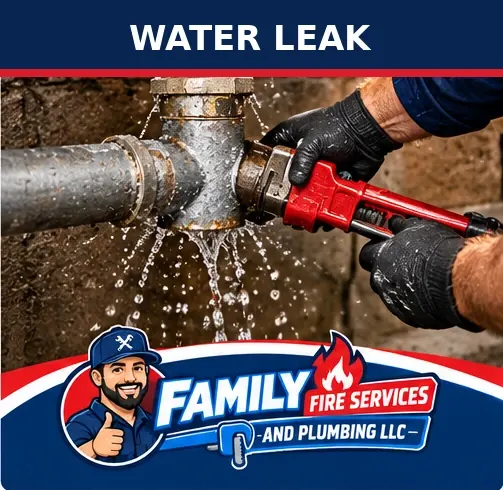
A frozen pipe often splits while it's frozen, and the leak only starts when it thaws. If you see a crack or water starts spraying:
- Shut the main water valve right away.
- Turn off the water heater.
- Cut power to the area if water is near outlets.
- Call a 24/7 plumber. In Montgomery County, that's (240) 428-8681.
Our burst pipe repair replaces the damaged section and checks the rest of the run, because one freeze can crack more than one spot. If water got into walls or under floors, leak detection helps find where it went.
When to Call a Plumber Instead
- You can't find or reach the frozen section
- The pipe is inside a finished wall or ceiling
- The pipe is cracked, bulging or already leaking
- Several fixtures are frozen at once
How to Keep Pipes From Freezing Again
Insulate exposed pipes, seal drafts, keep the heat at 55°F or higher, and let faucets on exterior walls drip on the coldest nights. Pipes that freeze repeatedly may need rerouting into a heated space, part of our plumbing installation work. Our winter plumbing maintenance checklist covers it all.
Older homes in Kensington, Takoma Park and Silver Spring often have supply lines in uninsulated exterior walls. Those are the first to freeze.